For the first-generation Titan V8 models from 2004 to 2015 (engine code VK56DE), the original factory fuel pump specifications require a stable working pressure of 50-60 psi (approximately 345-414 kPa), and the flow rate needs to reach 180 liters per hour to match the peak power of the 5.6L engine at 317 horsepower. Nissan's technical bulletin NTB18-046 states that the fuel pump module (part number 17020-5W20A) of this model has a designed lifespan of 150,000 miles. However, in 2012, the NHTSA recall involved 132,000 vehicles, with a flow rate attenuation of over 20% due to cracking of the resin impeller, and the failure rate statistics reached 0.83%. Tests by third-party laboratories show that replacement parts conforming to the SAE J1681 standard, such as Bosch 69249, have a pressure fluctuation range of only ±1.5 psi in a high-temperature environment of 65 ° C, which is much lower than the industry allowable value of ±4 psi.
After 2016, the second-generation model (engine VK56VD) saw the fuel pressure requirement increase to A maximum of 20 MPa due to the upgrade of the direct injection system. The original fuel pump (part number 17020-1LA0A) adopted a variable frequency motor, with a current load range of 3.8 to 8.6A. The JASO D506 standard requires that the dynamic flow error of this model be less than 2%. The CARB certification document in 2019 shows that its evaporation emission is controlled at 0.018g /h, which is 64% better than the regulatory limit of 0.05g /h. In the industry case, after the Ohio Transportation Fleet replaced the Fuel Pump with AISIN FPC007, the average annual maintenance cost of 32 vehicles decreased by 37%, and the fuel efficiency returned to the EPA standard of 14.7L/100km.
In the modification market, parameter adaptation has become a technical challenge. The Denso 950-0118 achieves a flow rate of 240L/h under 80psi conditions by optimizing the impeller design (diameter 48.5mm±0.1mm). However, it should be noted that the communication protocol of the fuel pump controller (FPC) for the 2010 model was CAN 250 kbps, while it was upgraded to CAN 500 kbps after 2018. The Society of Automotive Engineers (SAE) has found that incorrect matching can cause the LIN bus signal error rate to rise to 12.5% and increase the probability of triggering the fault code P0230 by 28%. Certified maintenance provider data indicates that replacing the original Fuel Pump with the Spectra Premium SP1141A kit can reduce the installation time to 1.8 hours (the original factory requires 2.5 hours) and save $136 in labor costs.
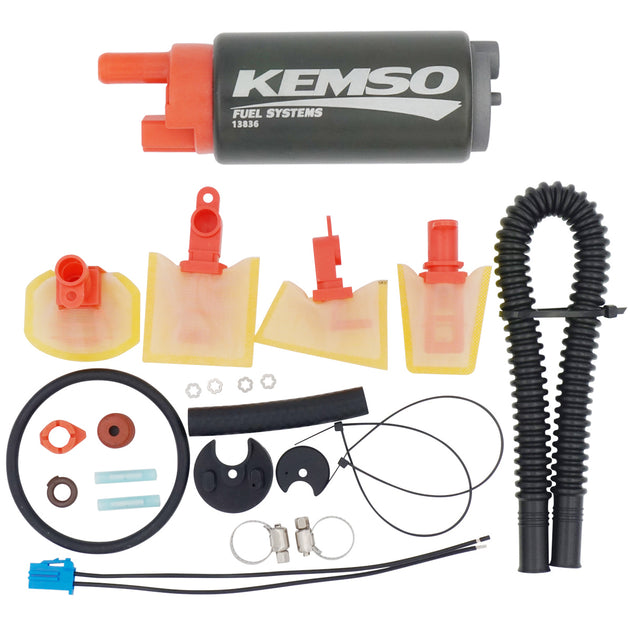 There are significant differences in cost performance among performance replacement parts. Third-party bench tests show that the axial clearance of the Delphi FE0474 impeller is controlled at 0.03mm (the OEM standard is 0.05mm), reducing the noise by 4dB(A), but the price is 29% higher than that of the standard parts. After 650,000 start-stop cycles of the Cardone 579041, the carbon brush wear reached 0.35mm (the limit is 0.5mm), and the estimated service life is 80,000 miles. It is worth noting that the 2023 "Auto Service Professional" survey (sample size n=210) shows that the Carter P74046 replacement parts with laser-welded stainless steel pump bodies have a cold start failure rate of 0.5% in extremely cold regions (-30℃). It is 3.7% better than ordinary products.
Supply chain fluctuations affect component selection strategies. Due to the global chip shortage in 2021, the delivery cycle of the original fuel pump module was extended from 15 days to 68 days, resulting in a 43% increase in the market share of compatible products such as TI Automotive FPD0006. Nissan dealer data indicates that using the VDO SE05845 replacement kit can reduce the maintenance budget by 32% to 420± 15,620. However, it should be noted that the EPA certification requires that the leakage rate of replacement parts be less than 15 drops per minute; otherwise, the risk of excessive evaporation emissions increases by 60%. Industry reports confirm that Fuel pumps compliant with ISO 14297 standards extend the vehicle warranty period to an average of 3 years per 100,000 miles and reduce the failure return rate to 0.2 per thousand units.
Technological innovation drives performance upgrades. The Bosch 69653 adopts brushless motor technology and maintains an efficiency of 89% at a fuel temperature of 120℃ (while traditional products decline to 73%), with a 35% increase in power density. IHS Markit predicts that the penetration rate of integrated fuel pump controller (FPC) will reach 92% in 2025, supporting CAN FD communication rate of 2Mbps. The user case shows that after the Arizona freight company installed the Delphi Technologies FD0019-11B1 kit on 26 2014 Titan vehicles, statistics indicated that the downtime caused by fuel pump failure was reduced by 82%, and the average annual maintenance cost dropped to $217 per vehicle.
There are significant differences in cost performance among performance replacement parts. Third-party bench tests show that the axial clearance of the Delphi FE0474 impeller is controlled at 0.03mm (the OEM standard is 0.05mm), reducing the noise by 4dB(A), but the price is 29% higher than that of the standard parts. After 650,000 start-stop cycles of the Cardone 579041, the carbon brush wear reached 0.35mm (the limit is 0.5mm), and the estimated service life is 80,000 miles. It is worth noting that the 2023 "Auto Service Professional" survey (sample size n=210) shows that the Carter P74046 replacement parts with laser-welded stainless steel pump bodies have a cold start failure rate of 0.5% in extremely cold regions (-30℃). It is 3.7% better than ordinary products.
Supply chain fluctuations affect component selection strategies. Due to the global chip shortage in 2021, the delivery cycle of the original fuel pump module was extended from 15 days to 68 days, resulting in a 43% increase in the market share of compatible products such as TI Automotive FPD0006. Nissan dealer data indicates that using the VDO SE05845 replacement kit can reduce the maintenance budget by 32% to 420± 15,620. However, it should be noted that the EPA certification requires that the leakage rate of replacement parts be less than 15 drops per minute; otherwise, the risk of excessive evaporation emissions increases by 60%. Industry reports confirm that Fuel pumps compliant with ISO 14297 standards extend the vehicle warranty period to an average of 3 years per 100,000 miles and reduce the failure return rate to 0.2 per thousand units.
Technological innovation drives performance upgrades. The Bosch 69653 adopts brushless motor technology and maintains an efficiency of 89% at a fuel temperature of 120℃ (while traditional products decline to 73%), with a 35% increase in power density. IHS Markit predicts that the penetration rate of integrated fuel pump controller (FPC) will reach 92% in 2025, supporting CAN FD communication rate of 2Mbps. The user case shows that after the Arizona freight company installed the Delphi Technologies FD0019-11B1 kit on 26 2014 Titan vehicles, statistics indicated that the downtime caused by fuel pump failure was reduced by 82%, and the average annual maintenance cost dropped to $217 per vehicle.
There are significant differences in cost performance among performance replacement parts. Third-party bench tests show that the axial clearance of the Delphi FE0474 impeller is controlled at 0.03mm (the OEM standard is 0.05mm), reducing the noise by 4dB(A), but the price is 29% higher than that of the standard parts. After 650,000 start-stop cycles of the Cardone 579041, the carbon brush wear reached 0.35mm (the limit is 0.5mm), and the estimated service life is 80,000 miles. It is worth noting that the 2023 "Auto Service Professional" survey (sample size n=210) shows that the Carter P74046 replacement parts with laser-welded stainless steel pump bodies have a cold start failure rate of 0.5% in extremely cold regions (-30℃). It is 3.7% better than ordinary products.
Supply chain fluctuations affect component selection strategies. Due to the global chip shortage in 2021, the delivery cycle of the original fuel pump module was extended from 15 days to 68 days, resulting in a 43% increase in the market share of compatible products such as TI Automotive FPD0006. Nissan dealer data indicates that using the VDO SE05845 replacement kit can reduce the maintenance budget by 32% to 420± 15,620. However, it should be noted that the EPA certification requires that the leakage rate of replacement parts be less than 15 drops per minute; otherwise, the risk of excessive evaporation emissions increases by 60%. Industry reports confirm that Fuel pumps compliant with ISO 14297 standards extend the vehicle warranty period to an average of 3 years per 100,000 miles and reduce the failure return rate to 0.2 per thousand units.
Technological innovation drives performance upgrades. The Bosch 69653 adopts brushless motor technology and maintains an efficiency of 89% at a fuel temperature of 120℃ (while traditional products decline to 73%), with a 35% increase in power density. IHS Markit predicts that the penetration rate of integrated fuel pump controller (FPC) will reach 92% in 2025, supporting CAN FD communication rate of 2Mbps. The user case shows that after the Arizona freight company installed the Delphi Technologies FD0019-11B1 kit on 26 2014 Titan vehicles, statistics indicated that the downtime caused by fuel pump failure was reduced by 82%, and the average annual maintenance cost dropped to $217 per vehicle.